Here you find beans of the genus Phaseolus, containing around 70 species. Most commonly grown is Phaseolus vulgaris - the common bean. Other important species are Phaseolus coccineus - the runner bean and Phaseolus lunatus - lima bean. Other domesticated species are Phaseolus acutifolius - tepary bean, and Phaseolus dumosus - year bean. In general, you could say that the common bean does well in "normal European summer conditions". This also applies to the runner bean, although it tolerates heat and drought a bit better. The lima bean though wants warmer growing conditions and is more drought-tolerant. Beans are one of the most economically important legume genera and have many culinary uses. Eat as haricot vert, dried and boiled beans, in stews and pots, in salads, like hummus or salsa. The possibilities are endless!
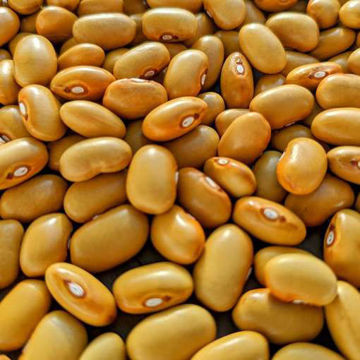
Signe is a bush bean around 40cm high. The green pods are around 10cm long, slightly dented with an elongated tip. Dried beans are dark-yellow-brown. Use young pods as haricots verts. Use fully matured and dried beans, for cooking. Old Swedish variety from Åby, Ramdala, Blekinge. From 1930. 75D. Phaseolus vulgaris. 10seeds/pack
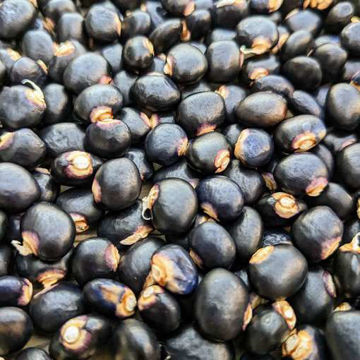
Succotash Pole Bean climbs up to around 200cm and needs support. Produces green, short, slightly flattened pods with beautiful beans inside. Fresh beans have a vivid, amazing purple color. Dried beans turn very dark blue/mauve. Fully matured beans can be dried and used as soup beans, etc. From the Narragansett First Nations of Rhode Island, USA. Phaseolus vulgaris. 95D. 10seeds/pack
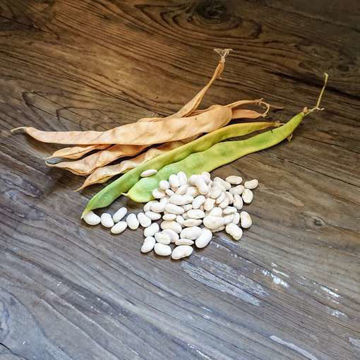
Syn Bonen Pole Bean is a pole bean growing to about 200cm in height. Produces large, broad, green pods with large white beans inside. Best harvested as fully dry and mature as cooking-bean. Can be used for soups, hummus, pots, and stews. Can be stored as a dry bean for later use. From Portugal. 100D. Phaseolus vulgaris. 10seeds/pack